May 27, 2026
Cosmetology School Admissions in Texas: What You Need to Know Before You Apply
It usually starts the same way. You’re thinking about doing something different—something more creative, more hands-on—and cosmetology keeps coming up. Then the questions hit: What do I actually need to get in? How long does it take? Am I even eligible?
If you’ve been trying to piece together answers from different sites, you’re not alone. Understanding cosmetology program requirements in Texas can feel more complicated than it needs to be. This guide breaks it down so you know what to expect—and what actually matters—before you apply.
What You Need to Enroll in Cosmetology School in Texas
Getting started is more straightforward than most people expect. While every school has its own process, the baseline requirements are similar across Texas.
In most cases, you’ll need:
- To meet the minimum age requirement
- A high school diploma or equivalent
- A valid form of identification
- The ability to enroll in a licensed training program
That’s really it. From there, the school will guide you through the rest. The goal isn’t to make things complicated—it’s to make sure you’re set up to complete your training and move toward licensing.
How the Admissions Process Usually Works
A lot of people expect a formal, high-pressure application. In reality, it’s usually more conversational and step-by-step.
Here’s what it tends to look like:
1. Initial Inquiry or Tour
Most people start by reaching out or booking a visit. This is your chance to see the space, ask questions, and get a feel for whether it fits your day-to-day life.
2. Meeting with Admissions
You’ll talk through your goals, your schedule, and what you’re hoping to do after school. It’s less about being evaluated and more about figuring out if it’s the right fit.
3. Application and Documentation
This is the straightforward part—basic paperwork to confirm eligibility.
4. Enrollment Agreement
If everything lines up, you’ll review the details of your program and schedule.
5. Choosing a Start Date
Many schools offer frequent start dates, so you’re not stuck waiting months to begin.
What to Look for Before You Commit
Not all programs are built the same, and this is where taking a bit of time up front pays off.
A few things worth paying attention to:
Hands-On Training
This isn’t a field you learn by watching. You want consistent, real practice.
Program Structure
Look at how the program fits into your life:
- Full-time vs part-time
- Weekly time commitment
- Realistic completion timeline
Learning Environment
You’ll get more insight from a visit than from any website. Pay attention to:
- How students interact
- Whether instructors are present and engaged
- The overall feel of the space
Student Experience
Ask if there’s a student salon. That’s where things shift from practice to real-world experience.
What You’ll Actually Learn in a Cosmetology Program
Once you’re in, things move quickly from “figuring it out” to building real skills.
Students in a cosmetology program typically work through a mix of theory and hands-on training, including:
- Hair cutting, coloring, and styling
- Sanitation and safety practices
- Client consultation and communication
- Basic skincare and nail techniques
A lot of the learning happens in repetition. You practice, adjust, and improve. Over time, things that felt unfamiliar start to feel automatic.
Licensing Requirements in Texas
Finishing school is one step. To work professionally, you’ll need to become licensed.
That usually means:
- Completing the required training hours at a licensed school
- Passing a written exam
- Passing a practical exam
A strong program builds preparation for both into the day-to-day experience, so you’re not scrambling at the end.
How Long Does Cosmetology School Take?
Time is one of the biggest questions people have—and it depends on your schedule.
In Texas, cosmetology training is typically around 1,000 hours.
That usually translates to:
- Full-time: under a year*
- Part-time: closer to a year or more*
The better question isn’t just “how fast can I finish?”—it’s whether the schedule is something you can realistically stick with.
What a Student Salon Experience Looks Like
If you’ve never been to a student salon, it’s a different experience than a traditional one—but in a good way.
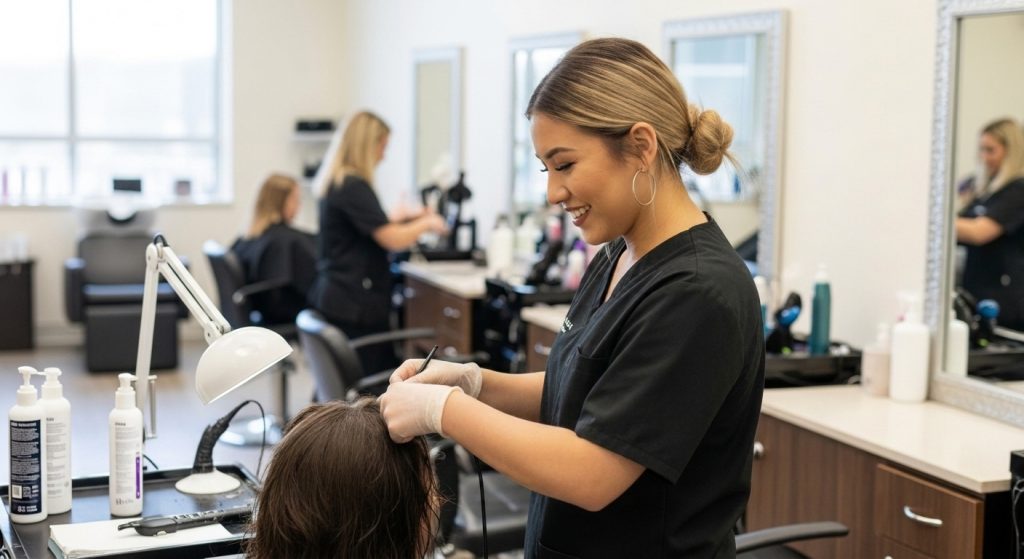
Students work with real clients in a supervised setting. That means:
- Services are performed by students
- Instructors step in when needed
- Appointments can take a bit longer
It’s where everything starts to click. You’re not just practicing—you’re working through real scenarios with real people.
Questions Worth Asking Before You Enroll
Before making a decision, it helps to go in with a few clear questions:
- What does a typical week look like?
- How much hands-on experience will I get?
- What’s included in tuition?
- How are students prepared for licensing exams?
The answers will tell you a lot about whether a program is focused on real readiness or just meeting minimum requirements.
Where This Path Can Lead
One of the biggest draws to cosmetology is how flexible the path can be.
After completing a cosmetology program and getting licensed, people go on to work in:
- Salons and barbershops
- Spas and skincare clinics
- Freelance or mobile services
- Their own businesses
Some people specialize early. Others figure it out as they go. There’s room to shape it into something that fits you.
A More Practical Way to Think About Getting Started
You don’t need to have everything mapped out before you apply.
What matters more is understanding:
- What the process looks like
- What’s expected of you
- Whether the environment feels right
From there, the next step becomes much clearer—and much more manageable.
*Program length when completed in normal time